
Dear Eatontown Public Schools Community Member:
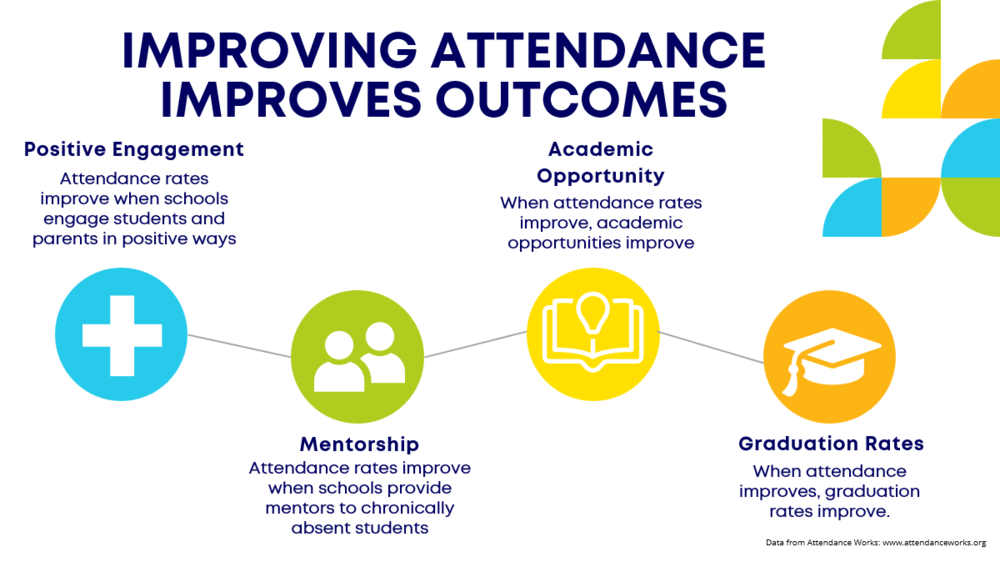
As we quickly approach the mid-year point, I wanted to provide our school community with some important information related to student attendance. Students who maintain consistent school attendance typically achieve greater levels of success in school. Student absenteeism can lead to low academic achievement, dropping out of school, delinquency, and gang involvement.
Our school district has established multi-systemic approaches and policies pertaining to student absenteeism to encourage consistent student engagement at school. Each of our schools has a school counselor who works with our families to support our students’ attendance. Additionally, the district has added a District Student and Family Support Coordinator to assist our families with school-related problems. Please click here to learn more about these important resources.
The compulsory education law (N.J.S.A. 18A:38-28 through 31) requires all children between the ages of 6-16 to attend school. The attendance regulations (N.J.A.C. 6A:16-7.6), require each district board of education to develop, adopt, and implement policies and procedures regarding the attendance of students, including the adoption of a definition of "unexcused absence" that counts towards truancy. While the regulations allow for the parent to be referred to municipal court for a truant child, consideration is made to refer or coordinate with a community-based social and health provider agency, other community resource, or the juvenile/family crisis intervention unit. Our district attendance policies and regulations can be accessed by clicking on the links below:
One important distinction needs to be made regarding “unexcused” and “excused” absences. All absences are counted on the students’ academic record regardless of whether they are excused or unexcused absences. Unexcused absences count toward truancy. However, both unexcused and excused absences are calculated on the students’ report cards and count toward chronic absenteeism.
Generally speaking, students are considered chronically absent if they miss 10% or more of the school year. A school year typically consists of 180 days for students. Therefore, if a student is enrolled in school from September to June, the student can attend school for a total of 180 days. If a student misses 18 or more school days, they are considered chronically absent. If a student is enrolled in school for less than 180 days, chronic absenteeism is defined as missing 10% or more of the total days the student was enrolled. The State of New Jersey penalizes schools that have high chronic absenteeism rates. Each of our schools has a high chronic absenteeism rate. Please click on the link below to see our school profiles:
Each of our schools is implementing an attendance action plan to encourage student attendance throughout the year. If you would like to learn more about these plans, please contact your child’s school principal. Please understand that the district realizes that students and families will be sick or other life events may prevent students from attending school. However, scheduling vacations and appointments outside of school schedule is highly recommended to maintain our students’ participation in school activities and services. Please click here to review the district’s Attendance Corrective Action Plan presentation for more information about the importance of student attendance.
Thank you for your consideration and cooperation. Working together we can support the learning and potential of all Eatontown children.
Sincerely,
Scott T. McCue
Superintendent of Schools